📞  — free, 24/7
 — free, 24/7| Package | Price per Dose | Price | |
|---|---|---|---|
| 240 pills | C$1.41 | C$450.07 C$337.55 Free shipping | |
| 120 pills | C$1.43 | C$227.70 C$170.77 | |
| 90 pills | C$1.51 | C$182.15 C$136.62 | |
| 60 pills | C$1.57 | C$125.89 C$94.42 | |
| 30 pills | C$1.69 | C$66.95 C$50.21 | |
| 360 pills | C$2.49 | C$1,194.87 C$896.15 Free shipping | |
| 240 pills | C$2.53 | C$809.07 C$606.80 Free shipping | |
| 180 pills | C$2.59 | C$621.53 C$466.15 Free shipping | |
| 120 pills | C$2.65 | C$423.28 C$317.46 Free shipping | |
| 90 pills | C$2.77 | C$332.19 C$249.14 | |
| 60 pills | C$2.91 | C$233.06 C$174.79 | |
| 30 pills | C$3.11 | C$125.89 C$94.42 | |
| 20 pills | C$3.34 | C$88.38 C$66.29 | |
| 10 pills | C$3.58 | C$48.20 C$36.15 |
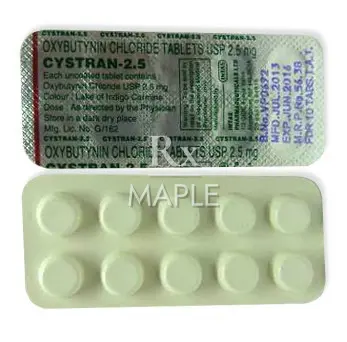
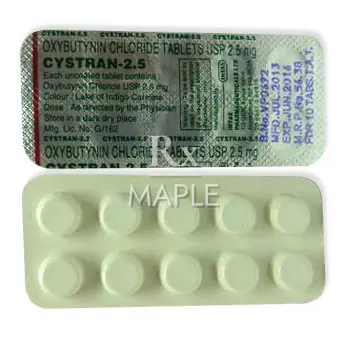
What is oxybutynin and how does it help with overactive bladder symptoms? Oxybutynin is an antimuscarinic agent that blocks acetylcholine at muscarinic receptors in the bladder detrusor muscle, most notably the M3 subtype. By diminishing spontaneous detrusor contractions, it reduces urgency, frequency, and episodes of urge incontinence. The medication is available in immediate-release tablets and in an extended-release formulation to support variable symptom patterns and tolerability.
Oxybutynin exerts its effect primarily by reducing parasympathetic stimulation of the bladder, thereby elevating the threshold for bladder contractions. This action can explain both therapeutic benefit and common anticholinergic adverse effects, such as dry mouth and blurred vision. After oral administration, oxybutynin undergoes hepatic metabolism to active and inactive metabolites; these metabolites contribute to both efficacy and adverse event profile. The extended-release form provides a steadier plasma concentration and daily dosing, which may improve adherence for some patients.
Pharmacokinetics and formulation considerations are relevant to clinical use. Oxybutynin is absorbed from the gastrointestinal tract and undergoes hepatic metabolism, with active metabolites contributing to the pharmacodynamic effect. The immediate-release product typically requires multiple daily doses, whereas the extended-release product is taken once daily. Clinicians tailor dose and formulation to symptom burden, tolerability, and concomitant medications, with attention to age-related sensitivity to anticholinergic effects.
The principal approved indication for oxybutynin is symptomatic treatment of detrusor overactivity in adults, characterized by urinary urgency, with or without urge incontinence, and increased day-to-day frequency. In this context, oxybutynin aims to reduce involuntary bladder contractions and improve daytime control of urination. The extended-release preparation is frequently chosen to promote consistent symptom control and minimize peak-related adverse effects.
Oxybutynin is also used in pediatric patients with detrusor overactivity due to neurogenic bladder, including certain congenital or acquired conditions, when behavioral strategies alone have not achieved adequate control. In these patients, mature anticholinergic therapy can decrease episodes of incontinence and improve quality of life. It is important to recognize that oxybutynin treats symptoms rather than cures the underlying disorder, and clinical response is monitored over weeks to months.
In adults with neurogenic or non-neurogenic detrusor overactivity, oxybutynin may be used as part of a multimodal regimen, including bladder training and other pharmacologic or device-based therapies. It is not indicated for stress urinary incontinence and should be used with caution in men with uncured prostatic obstruction or retention risk. Dose selection and monitoring are individualized to preserve safety while maximizing efficacy.
Dosing is individualized and depends on the specific product. Immediate-release oxybutynin is commonly prescribed in 5 mg portions taken two to three times daily, with adjustments up to a typical maximum of around 20 mg per day based on response and tolerability. Extended-release oxybutynin is generally taken as 5–10 mg once daily, with the option to titrate toward 30 mg per day in some regimens per product labeling. Pediatric dosing is based on clinical guidelines and body weight, with gradual titration and close monitoring.
Administration instructions emphasize adherence to the prescribed form. Immediate-release tablets should be swallowed with a full glass of water, with or without food, and dosing should be spaced to minimize peaks of anticholinergic activity. Extended-release tablets must be swallowed whole and must not be chewed, crushed, or broken, to maintain the intended release profile. Patients should avoid alcohol and activities requiring alertness if sedation occurs.
Special populations warrant consideration. Elderly patients often exhibit heightened sensitivity to anticholinergic effects and may require lower initial doses and slower titration. Hepatic impairment can alter metabolism and exposure; dose adjustments or alternative therapies may be needed. In pregnancy, oxybutynin is used only if clearly needed, as data are limited, and lactation considerations require a discussion of potential exposure to the infant.
Contraindications include urinary retention, gastric retention or obstruction, and uncontrolled narrow-angle glaucoma due to the risk of acute angle-closure events from anticholinergic activity. In addition, hypersensitivity to oxybutynin or any component of the formulation is a contraindication. Caution is advised in patients with severe hepatic impairment, as altered metabolism can increase systemic exposure and risk of adverse effects.
Important safety cautions cover broad anticholinergic burden. The medication can impair sweating, digestion, and accommodation, with potential effects on cognition in older adults. Clinicians should exercise caution in patients with myasthenia gravis, ulcerative colitis, gastric motility disorders, or severe constipation. Anticholinergic effects may be worsened by concomitant use of other antimuscarinic or sedating medications, and patients should report new or worsening symptoms promptly.
Drug interactions arise primarily from additive anticholinergic action and metabolic influences. Concomitant use with other anticholinergic agents or strong inhibitors or inducers of hepatic enzymes may alter oxybutynin exposure. Patients should inform providers about all medications, including over-the-counter agents and herbal supplements, to assess cumulative anticholinergic load and interaction risk.
The most frequent adverse effects relate to anticholinergic activity and include dry mouth, constipation, blurred vision, and tachycardia. Dizziness, drowsiness, and reduced sweating can occur, with heat intolerance in warmer environments. Some patients experience urinary hesitancy or retention, particularly with higher doses or in those with underlying urinary tract obstruction.
Less common but clinically meaningful effects include confusion or cognitive changes in susceptible individuals, particularly older patients. Gastrointestinal upset, nausea, or decreased appetite may accompany starting therapy. Sensitivity to sunlight or skin reactions is uncommon but possible. Most side effects tend to be dose-related and reversible upon dose adjustment or discontinuation, underscoring the importance of patient-physician follow-up during initiation and dose changes.
Patients should seek medical attention for signs of a severe allergic reaction, persistent inability to urinate, severe abdominal pain, marked confusion, chest pain, or symptoms suggesting an acute glaucoma episode. If symptoms persist or worsen after initiating therapy, clinicians may consider dose modification, switch to an alternative agent, or implement nonpharmacologic strategies to manage overactive bladder symptoms.
14–21 days. Free from C$287.05 .
5–9 days. C$43.06
−10% when paying with cryptocurrency.
−10% on all repeat orders.
All orders are packed in neutral, unbranded boxes with no product name on the outside.