📞  — free, 24/7
— free, 24/7 — free, 24/7| Package | Price per Dose | Price | |
|---|---|---|---|
| 360 pills | C$1.23 | C$593.14 C$444.85 Free shipping | |
| 180 pills | C$1.27 | C$305.70 C$229.28 | |
| 120 pills | C$1.35 | C$216.86 C$162.64 | |
| 90 pills | C$1.43 | C$172.44 C$129.33 | |
| 60 pills | C$1.57 | C$125.40 C$94.05 | |
| 30 pills | C$1.84 | C$73.14 C$54.85 | |
| 360 pills | C$1.57 | C$749.92 C$562.44 Free shipping | |
| 180 pills | C$1.65 | C$394.54 C$295.91 Free shipping | |
| 120 pills | C$1.80 | C$287.41 C$215.56 | |
| 90 pills | C$1.96 | C$235.15 C$176.36 | |
| 60 pills | C$2.18 | C$175.05 C$131.29 | |
| 30 pills | C$2.61 | C$104.50 C$78.37 | |
| 360 pills | C$2.51 | C$1,204.59 C$903.44 Free shipping | |
| 180 pills | C$2.74 | C$658.46 C$493.85 Free shipping | |
| 120 pills | C$3.06 | C$488.61 C$366.46 Free shipping | |
| 90 pills | C$3.37 | C$405.00 C$303.75 Free shipping | |
| 60 pills | C$3.84 | C$308.31 C$231.24 | |
| 30 pills | C$4.64 | C$185.50 C$139.13 | |
| 360 pills | C$3.14 | C$1,505.09 C$1,128.82 Free shipping | |
| 180 pills | C$3.55 | C$851.83 C$638.87 Free shipping | |
| 120 pills | C$4.04 | C$645.40 C$484.05 Free shipping | |
| 90 pills | C$4.51 | C$540.88 C$405.66 Free shipping | |
| 60 pills | C$5.45 | C$436.35 C$327.27 Free shipping | |
| 30 pills | C$7.33 | C$292.64 C$219.48 |
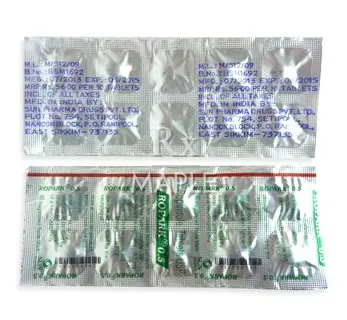
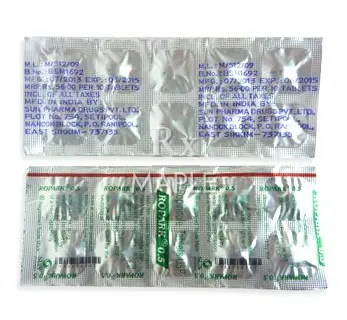
Ropinirole is a non-ergoline dopamine agonist that selectively stimulates D2-like receptors in the CNS, providing dopaminergic activity to improve motor function. It is indicated for the treatment of Parkinson disease and restless legs syndrome.
Ropinirole belongs to the class of dopamine receptor agonists. It acts by activating postsynaptic dopamine receptors in the striatum, promoting motor control. This mechanism helps to supplement diminished dopaminergic signaling in Parkinsonian states.
Formulations include immediate-release tablets and an extended-release tablet. The immediate-release form is typically taken multiple times daily, while the extended-release form is designed for once-daily dosing. Dosing choice depends on the condition, response, and tolerance.
Pharmacokinetics vary with formulation. After oral administration, ropinirole is absorbed and undergoes hepatic metabolism with renal and fecal excretion of metabolites. Peak plasma concentrations are usually reached within a few hours of dosing, and the drug can be titrated based on clinical response and tolerability.
In Parkinson disease, ropinirole is used to alleviate motor symptoms such as bradykinesia, rigidity, and tremor as part of a comprehensive treatment plan. It may be used alone or with other antiparkinsonian therapies to improve daily functioning.
In restless legs syndrome, ropinirole reduces the urge to move and associated discomfort, often improving sleep quality and daytime alertness. Dosing and treatment duration are tailored to symptom timing and response.
Ropinirole is generally intended for long‑term management within a clinician‑guided plan. Some patients may require adjustments when disease progression occurs or when adding other medications to the regimen.
Start with a low dose and increase gradually to minimize adverse effects. Clinicians adjust the schedule based on age, disease severity, and tolerability. Do not change dose without medical advice.
Immediate-release ropinirole is taken with or without meals, typically three times daily. Take each dose at evenly spaced intervals to maintain steady levels. Do not chew or crush tablets unless a healthcare provider has approved a different approach.
Extended-release ropinirole is taken once daily with water, with or without food. It should be swallowed whole and not split, chewed, or crushed. Try to take the dose at the same time each day to maintain a consistent effect.
Missed doses: for IR ropinirole, take the missed dose as soon as remembered unless it is close to the time for the next dose; do not double dose. For ER ropinirole, skip the missed dose and resume the regular schedule. If in doubt, contact a clinician for instructions. Do not replace a missed dose by increasing the subsequent dose beyond prescribed limits.
Storage: keep at room temperature, typically 20–25°C (68–77°F). Store in the original container away from moisture, heat, and light. Do not store in the bathroom. Keep out of reach of children. Do not use expired tablets and follow local guidance for disposal of unused medicine.
Common side effects include nausea, dizziness, sleepiness, fatigue, and abdominal discomfort. These usually appear early in therapy and may lessen with time as you adjust to the medication.
Lightheadedness on standing can occur due to lowered blood pressure. Sit or lie down if you feel faint and rise slowly to reduce risk of falls. Some people notice swelling in ankles or legs, or unusual muscle movements.
Less common but important risks include sudden sleep onset, confusion or vivid dreams, and impulse control problems such as compulsive gambling or hypersexual behavior. Movement disorders or uncontrolled jerking can also occur, particularly at higher doses. Seek medical advice if you notice any troubling effects or new symptoms.
Contact a clinician if side effects persist, worsen, or interfere with daily activities. Seek immediate help for signs of an allergic reaction, chest pain, severe dizziness, or fainting.
Inform your doctor about all medicines you take, including over‑the‑counter drugs and supplements, to avoid interactions that could affect ropinirole’s effectiveness or safety. Do not stop ropinirole suddenly without medical guidance, as withdrawal can worsen symptoms.
Discuss pregnancy, breastfeeding, or planned pregnancy with a healthcare provider. If you have kidney or liver disease, or if you are elderly, dose adjustments or monitoring may be required. Always tailor therapy to your clinical status under professional supervision.
14–21 days. Free from C$279.97 .
5–9 days. C$42.00
−10% when paying with cryptocurrency.
−10% on all repeat orders.
All orders are packed in neutral, unbranded boxes with no product name on the outside.