📞  — free, 24/7
 — free, 24/7| Package | Price per Dose | Price | |
|---|---|---|---|
| 240 pills | C$2.41 | C$680.79 C$578.67 Free shipping | |
| 180 pills | C$2.45 | C$520.04 C$442.04 Free shipping | |
| 120 pills | C$2.49 | C$352.20 C$299.37 Free shipping | |
| 90 pills | C$2.61 | C$276.56 C$235.07 | |
| 60 pills | C$2.75 | C$193.82 C$164.75 | |
| 30 pills | C$2.93 | C$103.99 C$88.39 | |
| 10 pills | C$3.38 | C$40.16 C$34.14 | |
| 240 pills | C$2.75 | C$777.71 C$661.06 Free shipping | |
| 180 pills | C$2.79 | C$590.96 C$502.32 Free shipping | |
| 120 pills | C$2.95 | C$416.03 C$353.63 Free shipping | |
| 90 pills | C$3.09 | C$328.56 C$279.28 | |
| 60 pills | C$3.32 | C$234.01 C$198.91 | |
| 30 pills | C$3.60 | C$127.63 C$108.48 | |
| 10 pills | C$3.80 | C$44.89 C$38.16 |
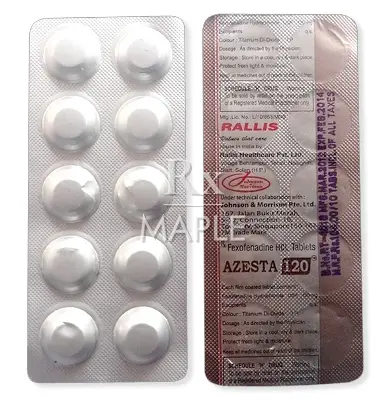
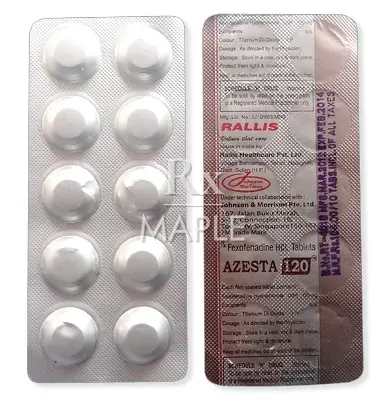
Fexofenadine is a selective peripheral H1 antihistamine of the third generation. It antagonizes histamine H1 receptors with minimal central nervous system penetration, providing relief from allergic rhinitis and chronic urticaria.
Fexofenadine is a non-sedating oral antihistamine with high selectivity for peripheral H1 receptors. It is the active metabolite of terfenadine and belongs to the third-generation class of antihistamines. The drug exhibits minimal hepatic metabolism and is largely excreted unchanged by the kidneys and biliary routes.
Mechanistically, fexofenadine competitively blocks histamine binding at peripheral H1 receptors, reducing vasodilation, capillary permeability, and pruritus. Clinically, onset of symptom relief is achieved within hours with a duration compatible with once- or twice-daily dosing.
Compared with loratadine and cetirizine, fexofenadine is consistently associated with lower CNS penetration and a lower risk of drowsiness. It has minimal cytochrome P450 involvement, reducing metabolic drug interactions relative to some second-generation agents.
Oral bioavailability and absorption are influenced by fruit juice; fexofenadine absorption is reduced when taken with certain fruit juices, necessitating separation by several hours. The half-life supports once- or twice-daily regimens, depending on indication.
Indications include seasonal and perennial allergic rhinitis and chronic idiopathic urticaria. Fexofenadine provides symptomatic relief from sneezing, rhinorrhea, pruritus, and wheal formation. It is used when non-sedating, once- or twice-daily therapy is desired.
Compared with loratadine and cetirizine, fexofenadine has a unique interaction profile with fruit juice and minimal hepatic metabolism. Onset of relief is similar, with differences in sedative potential and duration that may influence choice in sensitive patients.
| Drug | Primary action | Sedation risk | Metabolism | Absorption considerations | Typical indications |
|---|---|---|---|---|---|
| Fexofenadine | Peripheral H1 antagonist | Low | Minimal hepatic metabolism; largely renally excreted | Absorption reduced by fruit juice; separate administration | Allergic rhinitis; chronic urticaria |
| Loratadine | Peripheral H1 antagonist | Low | Metabolized to desloratadine (CYP-mediated) | Not notably affected by fruit juice | Allergic rhinitis; urticaria |
| Cetirizine | Peripheral H1 antagonist | Low-moderate | Metabolized to inactive metabolites; renal excretion | Not notably affected | Allergic rhinitis; urticaria |
Common adverse events include headache, dyspepsia, and fatigue. Sedation is rare and usually minimal. Use in severe renal impairment requires dose adjustment and caution in pregnancy and lactation. Concomitant fruit juice intake can markedly reduce absorption; separate administration by several hours to preserve bioavailability.
14–21 days. Free from C$287.05 .
5–9 days. C$43.06
−10% when paying with cryptocurrency.
−10% on all repeat orders.
All orders are packed in neutral, unbranded boxes with no product name on the outside.