📞  — free, 24/7
 — free, 24/7| Package | Price per Dose | Price | |
|---|---|---|---|
| 360 pills | C$1.69 | C$762.23 C$609.78 Free shipping | |
| 240 pills | C$1.73 | C$518.80 C$415.04 Free shipping | |
| 180 pills | C$1.77 | C$398.31 C$318.65 Free shipping | |
| 120 pills | C$1.87 | C$280.29 C$224.23 | |
| 90 pills | C$1.95 | C$218.82 C$175.05 | |
| 60 pills | C$1.97 | C$147.51 C$118.01 | |
| 30 pills | C$2.09 | C$78.66 C$62.93 | |
| 360 pills | C$1.55 | C$698.30 C$558.64 Free shipping | |
| 240 pills | C$1.63 | C$489.29 C$391.43 Free shipping | |
| 180 pills | C$1.69 | C$381.10 C$304.88 Free shipping | |
| 120 pills | C$1.83 | C$275.37 C$220.30 | |
| 90 pills | C$1.95 | C$218.82 C$175.05 | |
| 60 pills | C$2.12 | C$159.80 C$127.84 | |
| 30 pills | C$2.42 | C$90.95 C$72.76 |
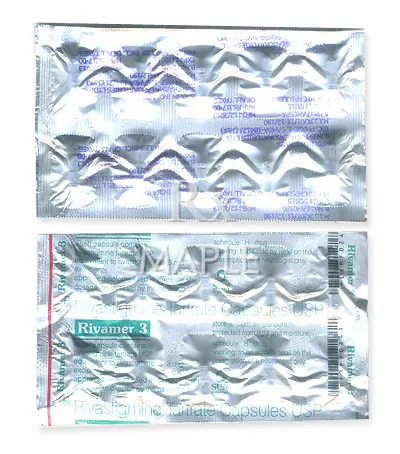
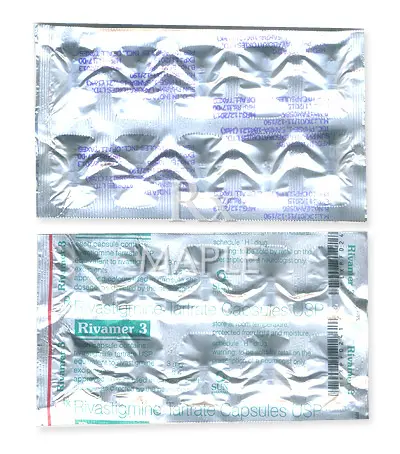
Rivastigmine tartrate is a carbamate cholinesterase inhibitor that yields prolonged, covalent carbamylation of acetylcholinesterase (AChE) and butyrylcholinesterase (BuChE), resulting in reversible inhibition of enzymatic activity. This dual inhibition differentiates rivastigmine from agents that target AChE alone and provides broader cholinergic augmentation in neurodegenerative dementias.
Pharmacologically, rivastigmine is administered as the tartrate salt and is formulated for oral dosing or transdermal delivery. It undergoes hydrolysis by tissue esterases rather than extensive cytochrome P450 metabolism, and its active metabolites are largely inactive, limiting systemic drug interactions driven by hepatic enzymes.
In clinical practice, rivastigmine is indicated for mild to moderate dementia due to Alzheimer disease and for mild to moderate dementia associated with Parkinson disease, reflecting the relative preservation of cholinergic deficits across these conditions. The transdermal patch provides sustained exposure over 24 hours, reducing peak–trough fluctuations and frequently improving tolerability for some patients.
Compared with selective acetylcholinesterase inhibitors, rivastigmine offers dual enzyme inhibition (AChE and BuChE), which may confer more persistent cholinergic effects as BuChE activity rises with disease progression. This mechanistic distinction can influence both efficacy and tolerability in certain patients.
Oral donepezil and galantamine are predominantly AChE inhibitors, with galantamine also modulating nicotinic receptors to enhance cholinergic neurotransmission. Rivastigmine’s metabolism is largely independent of CYP450 pathways, reducing potential drug interactions in polypharmacy common in older adults.
The active pharmacokinetic profile differs by formulation: the transdermal rivastigmine patch yields steady, lower peak concentrations and often fewer gastrointestinal adverse events relative to high-peak oral dosing, which is especially relevant for patients with sensitivity to nausea or vomiting.
Rivastigmine is indicated for mild to moderate dementia associated with Alzheimer disease, providing modest improvements in cognitive scores and daily functioning when administered with titrated dosing. In Parkinson disease dementia, rivastigmine is approved for symptomatic management of cognitive impairment and activities of daily living.
The onset of benefit typically occurs over several weeks, with clinical response assessed by standardized scales and caregiver observations. Dose titration is guided by tolerability, with gradual increases to maintenance levels and consideration of patch versus oral routes based on adherence and tolerability.
Contraindications include known hypersensitivity to rivastigmine or tartrate, and caution is advised in bradycardia, conduction abnormalities, peptic ulcer disease, or severe hepatic impairment. Cholinergic adverse effects are most prominent during initiation and titration and may necessitate dose adjustment or route change.
Rivastigmine differs from other acetylcholinesterase inhibitors by its dual inhibition of AChE and BuChE and by its predominant esterase-based metabolism. It is available in oral and transdermal forms, enabling tailored exposure and tolerability for individual patients.
Formulation choices influence safety and adherence: the transdermal patch provides steady drug delivery with lower peak concentrations, while oral formulations allow flexible dosing but carry higher transient GI risk. Drug interactions with CYP450 substrates are relatively uncommon with rivastigmine.
Clinical considerations include the distinct adverse-effect profile and appropriateness for comorbid conditions. Dosage planning should consider cardiac status, gastrointestinal tolerance, and the patient’s ability to manage transdermal administration or oral dosing schedules.
| Drug | Mechanism | Primary Enzymes Inhibited | Formulations | Metabolism/Interactions | Common Adverse Effects |
|---|---|---|---|---|---|
| Rivastigmine | Dual cholinesterase inhibitor | AChE and BuChE | Oral capsules; transdermal patch | Hydrolysis by esterases; minimal CYP involvement | Nausea, vomiting, weight loss; dizziness; patch-site irritation |
| Donepezil | Selective AChE inhibitor | AChE | Oral tablets/solutions | Predominantly hepatic CYP metabolism (2D6/3A4) | Nausea, diarrhea, bradycardia; vivid dreams |
| Galantamine | AChE inhibitor with nicotinic modulation | AChE (plus receptor effects) | Oral tablets/solution | Extensive hepatic metabolism (CYP2D6/3A4) | Nausea, anorexia, dizziness; syncope risk with bradyarrhythmias |
Across formulations, rivastigmine commonly produces cholinergic adverse effects, principally nausea, vomiting, anorexia with weight loss, and dizziness. These events are dose-related and often more pronounced during titration; they may be mitigated by gradual dose escalation and choosing the patch when appropriate.
Cardiovascular considerations include bradycardia and syncope, particularly in patients with conduction abnormalities or on concomitant antiarrhythmic medications. Cholinergic effects on the gastrointestinal tract can exacerbate ulcers or reflux in susceptible individuals, requiring cautious use in peptic disease.
For safety, rivastigmine exhibits limited interactions with cytochrome P450 substrates, given its esterase-dominated metabolism. Patch administration reduces peak plasma levels, potentially improving tolerability and adherence in patients with GI intolerance. Regular monitoring of weight, appetite, and cognitive measures remains recommended during therapy.
14–21 days. Free from C$281.01 .
5–9 days. C$42.15
−10% when paying with cryptocurrency.
−10% on all repeat orders.
All orders are packed in neutral, unbranded boxes with no product name on the outside.