📞  — free, 24/7
— free, 24/7 — free, 24/7| Package | Price per Dose | Price | |
|---|---|---|---|
| 360 pills | C$1.37 | C$617.31 C$493.85 Free shipping | |
| 180 pills | C$1.53 | C$342.94 C$274.35 | |
| 120 pills | C$1.72 | C$259.65 C$207.72 | |
| 90 pills | C$1.92 | C$215.55 C$172.44 | |
| 60 pills | C$2.19 | C$164.11 C$131.29 | |
| 30 pills | C$2.63 | C$97.97 C$78.37 | |
| 360 pills | C$1.63 | C$732.45 C$585.96 Free shipping | |
| 180 pills | C$1.82 | C$409.08 C$327.27 Free shipping | |
| 120 pills | C$2.08 | C$311.09 C$248.87 | |
| 90 pills | C$2.29 | C$257.20 C$205.76 | |
| 60 pills | C$2.65 | C$198.40 C$158.72 | |
| 30 pills | C$3.27 | C$122.46 C$97.97 | |
| 360 pills | C$1.86 | C$837.79 C$670.23 Free shipping | |
| 180 pills | C$2.12 | C$475.22 C$380.18 Free shipping | |
| 120 pills | C$2.49 | C$372.34 C$297.87 Free shipping | |
| 90 pills | C$2.74 | C$308.64 C$246.91 | |
| 60 pills | C$3.04 | C$227.80 C$182.24 | |
| 30 pills | C$3.47 | C$129.81 C$103.85 |
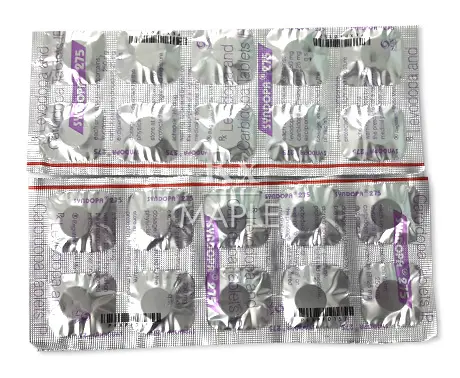
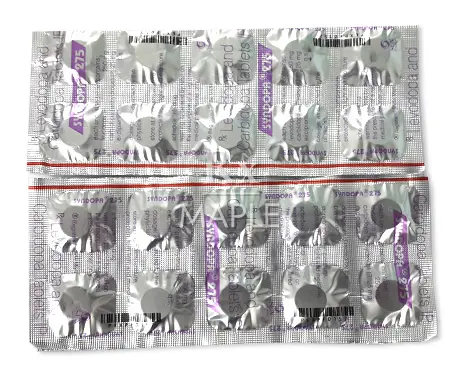
Carbidopa / levodopa is a fixed‑dose combination pharmacologic agent consisting of levodopa, a dopamine precursor, and carbidopa, a peripheral dopa decarboxylase inhibitor. Levodopa crosses the blood–brain barrier and is decarboxylated to dopamine in the central nervous system, while carbidopa decreases peripheral conversion and thereby enhances CNS delivery and reduces peripheral adverse effects; this combination is primarily used to manage the symptoms of Parkinson disease and related parkinsonian syndromes.
Pharmacologically, levodopa provides the substrate for dopaminergic neurotransmission in the striatum, where depleted dopamine underlies motor dysfunction in Parkinson disease. By coupling levodopa with carbidopa, peripheral decarboxylation to dopamine is markedly reduced, allowing a greater fraction of administered levodopa to reach the brain. This reduces peripheral adverse effects such as nausea, vomiting, and cardiovascular symptoms and allows lower total levodopa exposure to achieve the same central effect. The resulting central dopamine replacement improves bradykinesia, rigidity, and tremor but does not halt disease progression.
Pharmacokinetics are influenced by formulation and food intake. Levodopa is rapidly absorbed from the small intestine, with peak CNS concentrations occurring within one to two hours for immediate‑release preparations and later for sustained‑release forms. Food, particularly high‑protein meals, can slow absorption and blunt peak effect; clinicians commonly advise spacing doses and meals to optimize onset and duration of benefit. Carbidopa itself has negligible central activity and serves to inhibit peripheral aromatic L‑amino acid decarboxylase, thereby maximizing brain bioavailability of levodopa and reducing peripheral catecholamine–related side effects.
The principal indication for carbidopa/levodopa is symptomatic management of idiopathic Parkinson disease and related parkinsonian syndromes in adults. It is effective for improving motor function when bradykinesia and rigidity predominate and is useful for overcoming wearing‑off phenomena as disease advances. The combination may also be employed to manage dopamine‑responsive dystonias and other disorders in which central dopaminergic deficiency contributes to motor impairment, under specialist supervision.
In clinical practice, this therapy is used as part of a comprehensive dopaminergic strategy, often with attention to dosing intervals that minimize motor fluctuations. While it provides substantial symptomatic relief, it does not modify the underlying neurodegenerative process. Monitoring focuses on efficacy, dyskinesias, and tolerability, with dose adjustments guided by motor response and adverse effect profile.
Therapy usually begins with a low dose of immediate‑release carbidopa/levodopa, commonly 25 mg carbidopa/100 mg levodopa per dose, administered three times daily, with gradual titration based on clinical response and tolerability. Some regimens employ additional dosing or maintenance with extended‑release formulations to improve on‑off control and patient convenience. Tablet strengths and dosing schedules must be individualized and closely supervised by a clinician.
Administration instructions emphasize swallowing tablets intact with water; do not crush or chew modified‑release products unless explicitly indicated. To optimize absorption and minimize nausea, a clinician may advise taking the medication with a small amount of food if GI upset occurs, while recognizing that large or high‑protein meals can reduce levodopa bioavailability. Patients should aim for consistency in timing relative to meals and maintain adherence to the prescribed schedule. In the event of a missed dose, guidance typically recommends taking it as soon as remembered if not near the next dose; do not double the next dose to catch up.
Contraindications include known hypersensitivity to any component of the formulation and concomitant use with nonselective monoamine oxidase inhibitors due to risk of hypertensive crisis or serotoninergic complications. Caution is warranted in angle‑closure glaucoma, severe cardiovascular disease, or active peptic ulcer disease. Use during pregnancy or lactation requires a careful risk–benefit assessment; exposure is generally avoided unless clearly needed. Patients with a history of psychosis, severe cognitive impairment, or uncontrolled psychiatric disturbance should be monitored closely, as dopaminergic therapies can exacerbate psychiatric symptoms.
Important precautions include monitoring for dyskinesias, orthostatic hypotension, and impulse control disorders; dose adjustments may be required in elderly patients or those with hepatic or renal impairment. Levodopa therapy may interact with other dopaminergic or antidopaminergic agents; concomitant use with MAO inhibitors within 14 days is contraindicated. Dietary proteins and amino acids can influence absorption; clinicians often advise dosing separation from meals high in protein if motor response is suboptimal. Abrupt discontinuation should be avoided due to risk of withdrawal phenomena or neuroleptic malignant syndrome in susceptible individuals.
Frequent adverse effects include nausea, vomiting, anorexia, and generalized malaise, particularly during initiation or dose escalation. Orthostatic hypotension, dizziness, and lightheadedness may occur, as can dyskinesias with chronic therapy, especially at higher levodopa exposures. Neuropsychiatric effects—confusion, agitation, vivid dreams, and hallucinations—may be more common in older adults or in those with baseline cognitive impairment.
Other reported reactions include dry mouth, excessive sweating, and darkening of urine or sweat due to melanin‑like pigment formation. Skin lesions and melanoma risk surveillance are advised because of reported associations between long‑term dopaminergic therapy and melanoma; patients should be examined for new or changing pigmented lesions. Patients should report new or worsening involuntary movements, severe mood changes, chest pain, or fainting promptly, and therapy adjustments should be undertaken under medical supervision.
14–21 days. Free from C$279.97 .
5–9 days. C$42.00
−10% when paying with cryptocurrency.
−10% on all repeat orders.
All orders are packed in neutral, unbranded boxes with no product name on the outside.