📞  — free, 24/7
— free, 24/7 — free, 24/7| Package | Price per Dose | Price | |
|---|---|---|---|
| 5 bottles | C$18.37 | C$131.20 C$91.84 | |
| 4 bottles | C$21.97 | C$125.50 C$87.85 | |
| 3 bottles | C$27.28 | C$116.94 C$81.86 | |
| 2 bottles | C$36.95 | C$105.53 C$73.87 | |
| bottle | C$53.90 | C$77.00 C$53.90 |
Disclaimer: This information is for general guidance and does not replace medical advice from a pharmacist or doctor. Always consult a healthcare professional for your specific situation.
Could a painful red eye signal an infection?
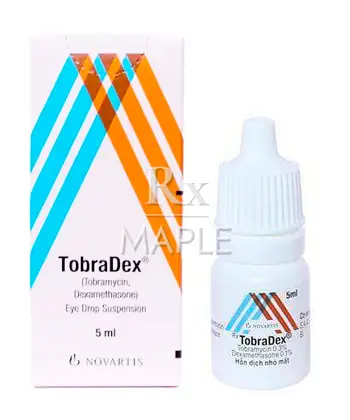
Tobradex combines an antibiotic to kill bacteria and a steroid to calm swelling, redness, and discomfort in the eye area.
Your pharmacist can explain how to use it safely and what to watch for while you treat your eye. It is prescribed to address both infection and inflammation, when a clinician decides this combination is best for you.
Doctors prescribe Tobradex for certain eye infections occasionally.
It is used when there is inflammation with infection, such as conjunctivitis or after eye surgery, under a clinician's guidance.
Always follow the prescription and leaflet directions exactly.
Some doctors may use Tobradex for additional inflammation.
This may occur after eye injuries or irritation when an antibiotic and steroid combination is thought helpful, with professional oversight.
Discuss potential side effects and alternatives with your clinician.
Tobramycin fights bacteria by blocking protein production inside.
Dexamethasone reduces swelling by dampening the body's inflammatory signals, which can lessen redness, pain, and eye discomfort over time progress.
Mechanistically, the drug combo targets infection and inflammation.
In pharmacology terms, the antibiotic binds bacterial ribosomes, halting protein synthesis, while the steroid modulates immune responses in tissues locally.
Follow the dosing schedule exactly as prescribed here.
Typically you tilt your head, pull down the lower eyelid, and gently drop the medicine into the eye without touching.
Don't blink vigorously after applying the drops, and avoid rubbing your eyes to reduce irritation.
Store at room temperature away from heat sources.
Keep the bottle tightly closed, check the expiry date, and discard any drops that look changed in color or clarity.
Do not share eye drops with others ever.
Tobradex may not be right for everyone unfortunately.
Tell your pharmacist about allergies, fungal infections, viral eye disease, or prior poor reaction to steroids or antibiotics in eyes.
Avoid using with other eye drops unless directed.
Pregnant or breastfeeding people should discuss risks with a clinician, as safety data in early pregnancy is limited at present.
Major side effects include eye irritation or itching.
Seek urgent medical help if you have severe eye pain, vision changes, redness spreading, or any signs of allergic reaction.
Other antibiotic and steroid combinations exist for eye use in Canada.
Maxitrol is a similar formula with different antibiotics; your clinician chooses based on infection type, allergy history, and local resistance.
Steroid-only eye drops may be used for inflammation, but they do not treat infection by themselves.
Discuss the benefits and risks with a pharmacist to choose the safest option for your eye condition and lifestyle needs.
| Product | Drug class | Common uses | Key safety notes |
|---|---|---|---|
| Tobradex | Tobramycin + dexamethasone (antibiotic + steroid eye drops) | Bacterial eye infections with inflammation; post-surgical inflammation | Caution in known allergies; avoid prolonged use; check for fungal/viral infections |
| Maxitrol | Neomycin + polymyxin B + dexamethasone | Infections with inflammation; similar indications to Tobradex | Allergy risk; resistance considerations; monitor for side effects |
| Pred Forte | Prednisolone acetate (steroid eye drop) | Inflammation without confirmed infection; post-surgical inflammation | Not an antibiotic; risk of increased eye pressure with long use |
Most people notice improvement within a few days. If there is no relief by then or symptoms worsen, contact your clinician promptly to review your plan and consider alternatives.
It is usually not recommended with contacts lenses. If you must use an eye drop, your clinician may advise removing lenses before application and waiting before reinserting to avoid contamination of the lens and eye.
Discuss risks with a healthcare professional; data exist but a clinician will balance benefits and potential effects on the fetus.
If you miss a dose, apply it soon. If it's nearly time for the next dose, skip the missed one and resume your schedule; do not double dose.
Food and drink usually don’t affect Tobradex, but always follow directions and discuss any other medicines that may interact with your eyes.
Use for as long as your clinician directs. Stop sooner if you improve quickly or if side effects occur, and report ongoing symptoms to avoid delays in care.
Long-term use carries greater risk of problems eye; your clinician will monitor and adjust treatment as needed to protect vision and eye health.
Storage conditions may vary by product and country. Check the official leaflet; some formats require refrigeration, while others stay at room temperature away from light and heat sources.
14–21 days. Free from C$285.29 .
5–9 days. C$42.79
−10% when paying with cryptocurrency.
−10% on all repeat orders.
All orders are packed in neutral, unbranded boxes with no product name on the outside.